Venezuela’s Massive Quake: Why the Experts Were Caught Off Guard
Jon Smith | Jun 25, 2026
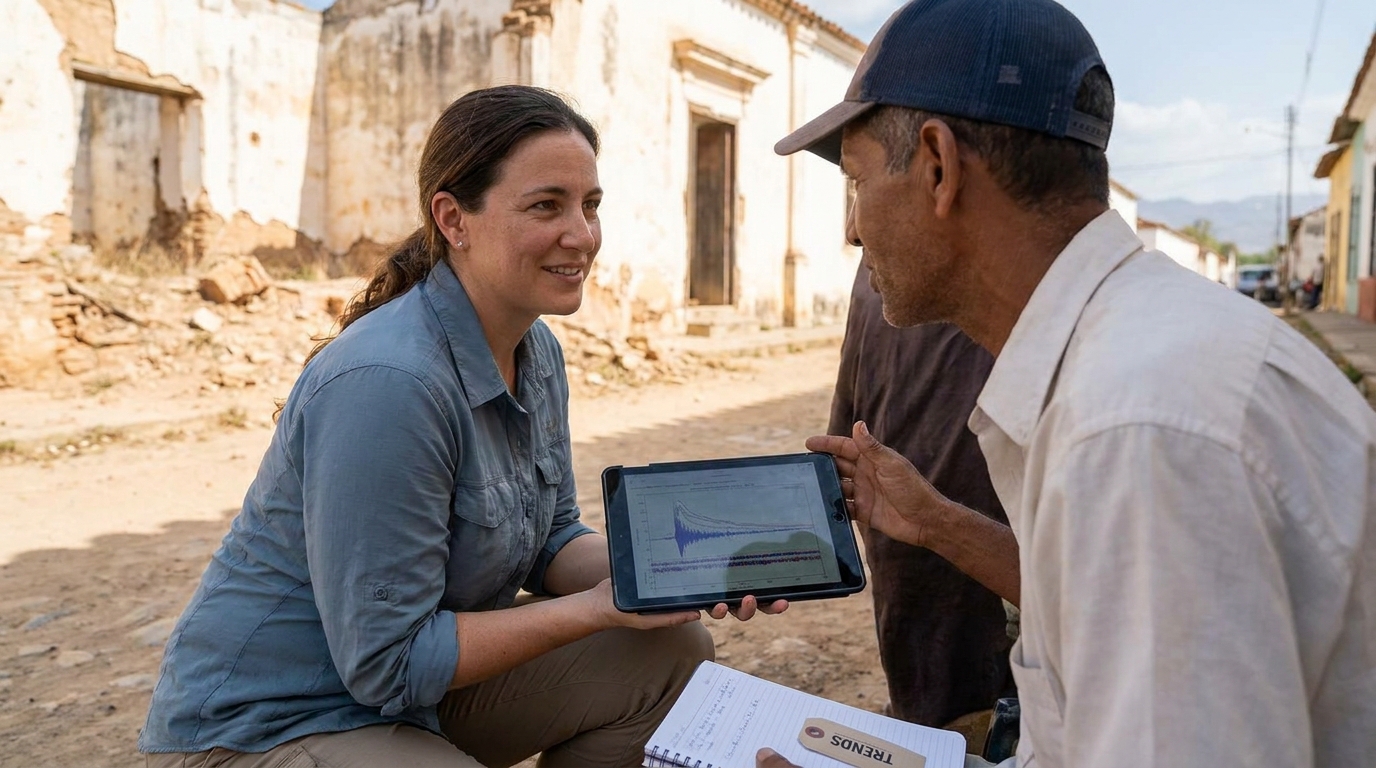
Imagine a quiet Wednesday evening on June 25, 2026, when the ground suddenly turns into a moving ocean. Most people in Venezuela thought they lived in a safe zone, but a massive 7.5 magnitude venezuela earthquake proved the experts wrong. It wasn't just one tremor either; it was a double-strike that left everyone from Caracas to the coast wondering how a low risk area could face such a disaster.
The venezuela earthquake damage is still being tallied, but the images of cracked skylines and crumbling neighborhoods in the capital tell a heavy story. We are looking at why the safety maps failed and how the affected region venezuela residents are coping. If you're a pet parent, you're probably also worried about how to keep your cats and dogs calm when the world feels like it's falling apart.
This article breaks down the numbers behind the 7.2 and 7.5 quakes, the truth about the tsunami warnings, and why our geological models need a serious update. We will also share some practical tips to keep your furry friends safe during aftershocks. Let's get into what really happened and what it means for the future of South American safety.
The Night the Ground Wouldn't Stop Moving
Imagine a quiet Wednesday evening on June 25, 2026, suddenly shattered by a force no one saw coming. For people across Venezuela, the ground didn't just shake; it felt like the world was coming apart. We aren't talking about a minor rattle that passes in seconds. Two massive earthquakes, hitting 7.2 and 7.5 magnitude, struck back-to-back and changed everything in an instant.
This event was a total shock because the region was historically labeled as a Very low risk zone. Experts previously estimated there was less than a 2% chance of damaging shaking occurring here over a fifty-year span. But that night, those statistics didn't matter. Buildings in the capital city crumbled, and a sudden tsunami advisory sent coastal residents into a scramble for safety. It was a terrifying reminder that nature doesn't always follow the hazard maps.
Why did these quakes feel so different from anything seen in decades? It comes down to the sheer scale of the damage and the total surprise of the event. We're going to break down the latest data, the structural impacts on the affected region, and exactly why the experts were caught so off guard.
Key insights:
- The 7.5 magnitude quake completely contradicted historical 'Very low' risk assessments for the region.
- Severe infrastructure damage in the capital occurred despite building codes based on low seismic expectations.
- A rare tsunami advisory followed the quakes, adding a layer of coastal danger seldom seen in this area.
7.2 and 7.5: Breaking Down the Numbers
Imagine checking your phone on a Wednesday evening and seeing a 7.2 magnitude alert, only for it to be followed by a massive 7.5 just moments later. That is exactly what happened in Venezuela on June 25, 2026. Different agencies reported slightly different numbers at first, with some saying 7.1 and others higher, but the raw power was undeniable. This double-strike was a massive shock because the region was actually classified as a very low risk area. Historical models suggested there was less than a 2% chance of damaging shaking over a fifty year period. This gap between the data models and the actual events shows that nature does not always follow the scripts we write for it. It also seems this was part of a global pattern, as tremors were felt as far away as Japan at the same time.
The first strike was a 7.2, but the 7.5 shift that followed was the real knockout blow. Back-to-back quakes like this are incredibly hard on buildings. Think of it like a boxer who takes a heavy hit and stays standing, only to get hit again before they can find their balance. The first tremor cracks the walls and weakens the frame, and the second one brings it all down. Because these events happened so close together on that Wednesday night, the infrastructure in the capital city had no chance to hold up. It turned a bad situation into a catastrophe because the structural integrity of the city was already compromised by the time the biggest wave arrived. This is why officials reported such severe damage to the capital city buildings.
Then there was the water. As if the shaking was not enough, the ocean became the next big worry for everyone on the coast. A tsunami advisory was triggered almost immediately, forcing emergency teams to handle two massive crises at once. They had to coordinate urban rescues while also pushing people toward higher ground in real-time. It was a frantic race against time in the dark of the evening. This shows why earthquake safety is about more than just sturdy walls. It is about how fast a community can react when the threat changes from falling bricks to rising tides. When the ground moves that much, the sea is rarely far behind, and the panic that follows is often just as dangerous as the quake itself.
Key insights:
- The 2026 quakes completely defied historical hazard assessments that labeled the region as very low risk.
- Back-to-back seismic events cause exponentially more damage because structures have no time to recover between strikes.
- The simultaneous reports of activity in Japan suggest a broader global seismic trend occurring at the same time.
- Tsunami advisories added a layer of complexity to emergency response, requiring coastal evacuations during urban rescue efforts.
A One-Two Punch in the Evening
Wednesday evening, June 25, 2026, started like any other in Caracas. Then the ground moved. First, a massive 7.2 magnitude earthquake rocked the city, sending people into the streets in a panic. But the nightmare wasn't over. Shortly after, a second, even more powerful 7.5 shift struck. This wasn't just bad luck; it was a structural catastrophe.
Think about it this way: the first quake shakes a building until its joints crack and its foundation weakens. It is vulnerable. When that 7.5 follow-up hits, the structure has no resilience left. It is like a boxer trying to stay upright after a heavy blow, only to get hit by a knockout punch before they can catch their breath.
The damage to the capital was severe, leaving officials and residents reeling. What is truly wild? Hazard maps labeled this region as 'Very low' risk, with less than a 2% chance of this happening in our lifetime. Nature clearly had other plans.
Key insights:
- The 7.2 and 7.5 quakes occurred back-to-back, leaving infrastructure with no time to recover.
- Historical data predicted a less than 2% chance of such an event, highlighting a major gap in modern risk modeling.
The Tsunami Advisory: Coastal Safety
Imagine surviving two massive earthquakes only to look at the Caribbean and wonder if the water is coming for you next. That was the reality on Wednesday evening, June 25, 2026. After the 7.2 and 7.5 magnitude quakes hit, the focus shifted instantly from crumbling buildings in the capital to the shoreline. Even though maps labeled this a very low risk zone, the sudden tsunami advisory made coastal safety the top priority for everyone in the region.
Emergency crews had to juggle real-time warnings while still digging through the damage in the city. It was a chaotic scene because official data suggested there was less than a 2% chance of this ever happening. This huge gap between the models and the actual event left officials scrambling to clear beaches and secure ports. When the risk is labeled that low, nobody is really looking for a wall of water, which made the response even more critical.
What does this mean for the future? It shows that nature does not always follow the rules we set. When the ground feels like it is failing and the ocean starts looking like a threat, those old safety models do not matter much. This event is a loud reminder that even safe zones need to be ready for the unexpected, especially when seismic activity seems to be happening globally at the same time.
Key insights:
- The 2026 quakes completely defied historical hazard assessments that predicted a very low risk for the region.
- Emergency services had to pivot from urban rescue to coastal evacuation in a matter of minutes.
- The event highlights a dangerous discrepancy between historical seismic models and real-world high-magnitude events.
Why the 'Low Risk' Label Didn't Age Well
Imagine living in a place where the experts told you that you were safe. For years, people in these parts of Venezuela looked at hazard maps that labeled their home as a very low risk zone. Then came the evening of June 25, 2026. Two massive earthquakes, measuring 7.2 and 7.5, shattered that sense of security in seconds. It was not just a small tremor. It was a catastrophe that showed a massive gap between what the maps predicted and what actually happened.
The Think Hazard assessment for this region was remarkably confident before this. It gave the area a Very low rating. This classification was based on the idea that there was less than a 2% chance of damaging shaking over a 50 year period. To a city planner or a homeowner, 2% sounds like a safe bet. But here is the catch. A low probability is never a guarantee of safety. When those quakes hit, they did not care about the statistics. They triggered tsunami advisories and left the capital city with severe building damage.
Think of it this way. If you were told there was a 2% chance of a fire in your home over the next few decades, you might not worry much. But if that fire happens today, the low risk label does not help you put out the flames. The 2026 reality has exposed how dangerous it is to rely on historical data that might be missing the full picture. We are seeing a trend where high magnitude events are popping up in places that were supposed to be stable.
When Geology Breaks the Rules. These events are doing more than just breaking concrete. They are challenging everything we thought we knew about regional fault lines. When geology breaks the rules like this, it suggests that our current models are missing something big. We might be looking at fault lines that were previously unknown or significantly underestimated. This is not just a scientific puzzle. It is a matter of life and death for people living in these zones.
If a safe zone can produce a 7.5 magnitude strike, then our building codes are officially obsolete. We have to ask why we are still building structures based on maps that are clearly failing to predict the big ones. We need a total re-evaluation of how we build in low risk zones because the earth is clearly playing by a new set of rules. It is time to stop looking only at what happened in the past and start preparing for a future that is much more active than we expected.
What does this mean for you? It means that even if you live in a region labeled as safe, you should still have a plan. The discrepancy between the models and the reality in 2026 is a reminder that nature does not always follow our charts. While Venezuela was dealing with this disaster, tremors were also hitting Japan, which points to a much bigger global pattern. We need to focus on resilience rather than just probability from now on.
Key insights:
- A Very low risk rating means there is still a 2% chance of disaster, which is not a guarantee of safety.
- The 2026 earthquakes prove that historical hazard maps can have massive gaps compared to real-world events.
- Current building codes in supposedly safe zones need an immediate re-evaluation to handle unexpected high-magnitude quakes.
- Geologists are discovering that regional fault lines are much more complex and active than previously recorded.
When Geology Breaks the Rules
Imagine living in a city where maps labeled the earthquake risk as "very low" for decades. You would feel pretty safe. But on Wednesday evening, June 25, 2026, that security vanished in seconds. Two massive quakes, measuring 7.2 and 7.5, tore through Venezuela and caught everyone off guard. This was a geological shock. When a region with less than a 2% chance of damaging shaking gets hit by back-to-back monsters, the old rulebook is officially broken.
This disaster exposes a huge gap between our scientific models and reality. If "stable" zones can produce a 7.5 magnitude strike, we have to rethink how we map fault lines. The severe damage in the capital and the sudden tsunami advisories prove that current building codes aren't enough for these surprises. We need a total re-evaluation of safety standards in areas once thought to be safe. If the earth is breaking the rules, our planning has to catch up fast.
Key insights:
- The 7.2 and 7.5 magnitude quakes directly contradicted historical hazard assessments that labeled the region as very low risk.
- Current urban building codes in supposedly stable zones require an immediate overhaul to account for high-magnitude seismic events.
Caracas Under Pressure: A Look at the Damage
Imagine looking up at a skyline you have known your whole life and seeing it changed in seconds. On Wednesday evening, June 25, 2026, Caracas felt the full force of two massive earthquakes. These were not just small tremors. We are talking about 7.2 and 7.5 magnitude strikes that turned a quiet evening into a nightmare. In the older neighborhoods, where history lives in the brick and mortar, the damage is truly heartbreaking. Many of these buildings simply could not withstand the violent shaking, leaving piles of debris where homes used to be.
What makes this even more shocking is that many experts did not see it coming. Historical hazard assessments for this region once labeled the earthquake risk as very low. In fact, official reports suggested there was less than a two percent chance of any damaging shaking happening in the next fifty years. This massive gap between the models and the reality of a 7.5 magnitude quake is going to change how we look at safety in this part of the world. It shows that nature does not always follow the maps we draw. Infrastructure that people rely on every day has failed in multiple spots, and roads look like they were torn apart by hand.
Right now, the search for survivors is the top priority for every emergency crew in the city. Rescuers are working through the night, using their hands and specialized tools to find anyone trapped under the rubble. It is a race against time that feels like it will never end. Officials have been very cautious about giving out victim numbers just yet because the situation is still so fluid. Everyone is waiting for news and holding their breath as the dust finally starts to settle. It shows just how much a single evening can change the life of a city and the people who call it home.
While the capital got most of the early attention, the shaking did not stop at the city limits. Several states across Venezuela felt the brunt of that 7.5 magnitude strike, and the reports are starting to trickle in. In the rural areas, the situation is even more worrying for those on the outside. Downed power lines and broken cell towers have cut off entire communities from the rest of the world. Getting news out of these regions has been a massive struggle for emergency teams and local government. We know the damage is there, but without a clear line of communication, it is hard to know exactly where help is needed most.
When the ground starts shaking, our first instinct is to grab what we love, and for many of us, that means our cats and dogs. Pets get just as scared as we do, and they might even be more confused because they do not understand why the world is moving. During aftershocks, it is best to keep your pets in a carrier or on a leash so they do not bolt in a panic. Scared animals often try to hide in dangerous, hard to reach places. Keeping them close and calm can make a huge difference when everything else feels like it is falling apart.
It is also heartening to see how local communities are stepping up right now. People are working together to set up pet friendly shelters so that no one has to choose between their own safety and their furry best friend. These grassroots efforts are popping up in neighborhoods that were hit the hardest. A little extra comfort and a safe place to sleep go a long way for a scared animal and its owner. It is a reminder that even in the middle of a disaster, the bond we have with our pets and our neighbors can help us get through the toughest nights.
Key insights:
- The 7.5 magnitude earthquake directly contradicts historical 'very low' risk assessments for the region.
- Downed communication lines in rural states are masking the full extent of the disaster beyond Caracas.
- A tsunami advisory was issued immediately following the quakes to protect coastal residents.
- Community led pet shelters are becoming a vital part of the local emergency response.
The Affected Regions Beyond the Capital
While the capital's damage made headlines, the real tragedy often hides in the states furthest from the spotlight. On that Wednesday evening in June 2026, the 7.5 magnitude strike did not just rattle windows. It leveled lives in regions that were never supposed to see this kind of activity. States like Sucre and Monagas felt the full force of the shaking. Because historical data suggested a very low risk for the area, many residents were caught completely off guard. Imagine going to bed in a safe zone and waking up to a disaster that defies every map the experts ever drew.
The struggle now is simply knowing what happened. In rural towns, the silence is scary. With power lines down and cell towers toppled, getting news out of these affected regions has become a slow and difficult crawl. We know a tsunami advisory hit the coast, but what about the villages tucked away in the mountains? Without electricity, they are effectively cut off from the world. It is a harsh reminder that when the grid fails, so does our ability to reach those who need help the most.
Key insights:
- The 7.5 magnitude earthquake struck a region previously classified as very low risk by hazard models.
- Downed power lines in rural states have created a communication blackout, making it difficult to assess the full scale of the damage.
Protecting the Most Vulnerable (Including Our Pets)
When those 7.2 and 7.5 magnitude quakes hit on Wednesday, the chaos was hard on everyone. Imagine being a pet during that noise. Since the area was labeled very low risk, many lacked a go-bag for their furry friends. But aftershocks are still a threat, and your pets need a plan.
Stay calm so they don't panic. Keep a carrier near the door and check that collars have updated tags. If your cat bolts, block off dangerous hiding spots now. Also, look for the pet-friendly shelters popping up in the capital so families can stay together.
Even though experts were caught off guard, seeing local communities share food and water for animals is truly inspiring. It is a reminder that in a crisis, our four-legged family members deserve a spot in the safety plan too.
Key insights:
- Prepare a pet-specific go-bag even in regions historically labeled as low risk.
- Utilize community-led pet-friendly shelters to keep families and animals together during recovery.
Is the Whole Planet Shaking? The Japan Connection
Imagine sitting at home when your phone starts blowing up with news about Venezuela. Two massive quakes, a 7.2 and a 7.5, hit back to back on a Wednesday evening in June 2026. But then you see reports of tremors in Japan happening at the exact same time. It feels like the whole planet is vibrating. This is not just a local disaster. It is a global moment that has everyone asking if these two distant events are actually linked.
Social media was quick to jump on the conspiracy bandwagon with claims that the tectonic plates are finally giving up. But what do the experts say? Seismologists often talk about sympathetic quakes where one big shake might trigger another far away. While it sounds like science fiction, the reality is usually more about global seismic patterns. Most scientists argue that while large quakes send ripples across the globe, a direct cause and effect between Venezuela and Japan is still a subject of intense debate.
The real shocker is not just the timing but how wrong the predictions were. These regions were labeled as very low risk with less than a 2% chance of damaging shakes over fifty years. Yet here we are looking at severe damage in the capital and tsunami advisories. It makes you wonder why the models were so far off. This gap between historical data and current reality is forcing a massive rethink of how we judge geological safety in areas we once thought were stable.
Is the Earth actually shaking more or are we just better at noticing it? The trend of high magnitude hits in supposedly safe zones suggests we might need to toss out the old rulebooks. It is not about global conspiracies. It is about a planet that does not always follow our maps or our expectations. We have to start paying attention to these patterns because the old data clearly is not enough anymore.
Key insights:
- Simultaneous quakes in Japan and Venezuela fueled social media theories about global tectonic instability.
- Seismologists distinguish between coincidental timing and actual sympathetic triggering of distant faults.
- The 2026 events highlight a major failure in traditional hazard models that rated these areas as very low risk.
- Recent trends suggest a need to update building codes and emergency plans in regions previously considered geologically quiet.
What This Means for the Future
How do you prepare for something that is not supposed to happen? For years, hazard maps labeled this part of Venezuela as a very low risk zone with less than a 2% chance of damaging shaking. But on a Wednesday evening in June 2026, nature ignored the math. When the 7.2 and 7.5 magnitude quakes hit, they did more than damage buildings in the capital; they shattered our assumptions about geological stability across South America.
This is a massive wake-up call for the region. If a stable zone can produce back-to-back massive strikes and trigger tsunami advisories, every coastal city needs to rethink its building codes. We are seeing a trend where huge quakes pop up in places once thought safe. It means safety is no longer just about looking at historical charts. It is about being ready for the unexpected because the old models clearly missed something big.
Despite the severe damage, the focus now turns to recovery. The resilience of the Venezuelan people is on display as communities pull together to face this new reality. While the experts will have to redraw their maps to explain these discrepancies, the real story remains one of human strength. We have learned that even when the ground is unpredictable, the people stay solid.
Key insights:
- The 2026 quakes prove that historical low-risk classifications can be dangerously misleading.
- Regional building codes and tsunami protocols require urgent re-evaluation in traditionally stable zones.
- Community resilience remains the strongest defense when geological models fail to predict disasters.
Frequently Asked Questions
How big were the earthquakes that hit Venezuela in June 2026?
Venezuela was hit by two massive earthquakes on Wednesday evening, June 25, 2026. They measured 7.2 and 7.5 in magnitude, which is much stronger than what most people expected for that area.
Here is the thing that really stands out. Historical records labeled this region as a very low risk zone with almost no chance of big shaking. Seeing two powerful strikes back to back like this means experts will likely have to rethink how they map out earthquake hazards in the future.
Was there actually a tsunami after the shaking stopped?
A tsunami advisory was issued immediately after the earthquakes rattled the region. When you have quakes that big, officials do not take any chances with the coast.
While the most visible impact was the severe damage to buildings in the capital city, the tsunami warning added another layer of fear for people living near the water. It is a good reminder that seismic events can cause a chain reaction of different safety threats.
Why did experts think this region was a 'very low' risk for quakes?
It basically comes down to the historical data and hazard models used by groups like Think Hazard. They classified the risk as very low because their math showed less than a 2% chance of any damaging shaking happening within a 50 year window. Before the June 2026 events, the area was seen as geologically stable.
Here is the thing, these assessments are based on past patterns. When you get massive 7.2 and 7.5 magnitude strikes in a safe zone, it shows that geological shifts can sometimes ignore the rulebook. It is a big reason why officials are now re-evaluating how we look at building codes in areas we once thought were totally safe.
Which cities in Venezuela saw the most building damage?
The capital city took the brunt of it, with officials reporting severe damage to buildings across the metro area. While the pair of quakes rattled a huge region, the high density of people and structures in the capital meant the impact was much more visible and dangerous there.
Reports from ABC News and Euronews highlighted that the shaking was powerful enough to trigger tsunami advisories along the coast as well. We are still waiting on official victim numbers, but the focus is clearly on the infrastructure in these major hubs that just were not expecting this kind of seismic activity.
Conclusion
The double strike of the 7.2 and 7.5 magnitude quakes in Venezuela serves as a sobering reminder that nature does not always follow our maps. While experts once labeled this region as low risk, the reality on the ground in Caracas and the affected region proved otherwise. This event shows us that seismic hazard models are only as good as the history they are built on, and sometimes, the earth writes a new chapter that catches us all off guard.
Moving forward, this disaster should push us to rethink how we prepare for the unexpected. It is not just about updating building codes in the capital or monitoring fault lines more closely, but also about the small, daily steps of personal safety. Whether you are checking on your neighbors or making sure your pets have a clear path to safety during aftershocks, being ready is a constant job.
The bottom line is that the venezuela earthquake damage was a wake-up call for the entire continent. We might not be able to predict exactly when the ground will move again, but we can control how we react to it. Stay informed, stay prepared, and remember that even in the face of massive shifts, community and resilience are what help us rebuild.